Baby Sharks That Eat Each Other in Womb
/https://tf-cmsv2-smithsonianmag-media.s3.amazonaws.com/filer/Surprising-Science-Sand-Sharks-631.jpg)
Babe animals may seem irresistibly adorable, just in reality many of them are computing killers. Hyena, wolf or even dog litter runts are pushed aside past their larger siblings and left to become hungry; fuzzy white egret chicks will kick their weaker clutch mates out of the nest to certain doom; and baby golden eagles sometimes go so far equally to snack on their smaller brothers and sisters while their mother looks on.
Perhaps most disturbing of all, however, is the instance of the baby sand tiger shark. While sharks may not be the near snuggly animals to brainstorm with, the sand tiger shark sets a new precedent for fratricide. This species practices a form of sibling-killing called intrauterine cannibalization. Yes, "intrauterine" refers to embryos in the uterus. Sand tiger sharks eat their brothers and sisters while yet in the womb.
Even past nature'southward barbarous standards, scientists admit that this is an unusual mode of survival. When sand tiger sharks develop in their mother's uteri (females have both a left and right uterus), some–normally the embryo that hatched first from its encapsulated, fertilized egg–inevitably abound faster and larger than others. Once the largest embryos cross a certain size threshold, the hungry babies turn to their smaller siblings equally user-friendly meals. "The approximately 100 mm hatchling gain to attack, kill and eventually swallow all of its younger siblings, achieving exponential growth over this menstruation," a team of researchers who investigated the phenomenon wrote this calendar week in Biology Letters.
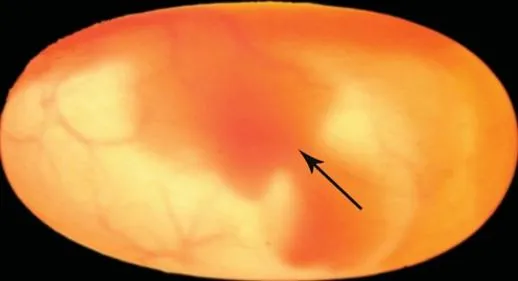
From what began as two uteri total of a dozen embryos results in just two dominating infant sand tiger sharks coming full term. What's more, in one case the unborn babies eat all of the living embryos, they turn to their female parent's unfertilized eggs next, in a miracle called oophagy, or egg-eating. By the time those two surviving babies are finally ready to exist introduced into the big, bright world, all of the pre-birth inner feasting has paid off. They emerge from their mother measuring in at most 95 to 125 centimeters long, or a bit longer than a baseball bat, significant fewer predators can option them off than if they had shared nutrient with siblings and were smaller.
This peculiar state of affairs has implications for the genetic makeup of the species. Female sand tiger sharks, like many animals, mate with multiple males. Oftentimes in nature, females determine which males will sire the next generation past selectively choosing to mate with the most impressive available (or bachelors) around. If mating with multiple males at any given time–as sharks, insects, dogs, cats and many other animals sometimes do–the babies that the female somewhen produces share the aforementioned womb with siblings that may accept unlike fathers.
In this example, yet, at that place are two modes of option at work. Females may choose mates, but that does not guarantee those males' genes will brand the cut. The embryos the males sire volition likewise have to survive the subsequent frenzy of cannibalism going on inside the female person'southward torso.
To find out whether some males are mating only missing out on really producing offspring, the authors of this new report undertook microsatellite DNA profiling of 15 sand tiger shark mothers and their offspring. The researchers collected the sharks from accidental mortality events nigh protected beaches in South Africa betwixt 2007 to 2012. By comparing the embryo genetics, the researchers could decide how many fathers were involved in fertilizing the eggs.
Nine of the females, or lx per centum, had mated with more than ane male, the researchers found. When it came to which embryos hatched and grew big first (and thus would have survived if their mothers hadn't have been killed), 60 percent shared the same father. This ways that fifty-fifty if a female person mates with more than one male, there is no guarantee that the male has been successful in passing on his genes. Rather, he could have merely provided a convenient entree for another male's offspring.
This also explains some male sand tiger shark behavior and physiology. Male person sand tiger sharks ofttimes baby-sit their mates against other males simply later on copulation. Males of this species likewise produce a conspicuously large corporeality of sperm compared to other sharks. Both of these characteristics increase the likelihood that the embryo fertilized by that male person will successfully implant in the female'south uterus earlier, giving it a meaning head start for developing more chop-chop than its siblings, which makes it more than probable that the contempo mate's offspring will eat the others that may come up along.
As for the females sand tiger sharks, some researchers think they actually may not accept much of a selection when information technology comes to mating with multiple males. It could be that females just give in to some amorous partners because the energetic cost of resisting those advances outweighs the cost of just conceding to the act–a behavior biologists call the convenience polyandry hypothesis. In this instance, nonetheless, females may still get the concluding express mirth since the males they first mated with and most likely preferred volition have the greater chance of actually triumphing as the father of their children. " may allow female person sand tigers to appoint in convenience polyandry after mating with preferred males without actually investing in embryos from these superfluous copulations," the researchers speculate.
While the females did invest in initially developing those doomed embryos, those investments are much smaller than what would exist required to bring multiple embryos to full term. Those smaller embryos also represent resources allocated to the stronger, dominate embryonic winners, which thus have a amend chance of surviving and passing on their female parent'due south genes than if she had spent the energy to instead birth multiple, weakling babies. In a way, the female parent shark is providing nourishment for her strongest babies by producing multiple embryos that the most robust tin eat.
"This system highlights that competition and sexual selection can still occur after fertilization," the authors write. For case, the starting time embryo to implant may not cease upwards existence the the one that survives the gladiator loonshit of the sharks uterus. While this new research still needs to delve into the details of the competition that takes place within the uterus, a movie is emerging based upon these initial findings: Females may chose which males to mate with or may be coerced into reluctantly mating, simply male person sperm fettle and the quality of the embryos they produce could also carry meaning weight in which animals ultimately wind upwards every bit winners in this organization.
"This contest can play an important and probably under-appreciated role in determining male person fettle," the authors conclude.
Source: https://www.smithsonianmag.com/science-nature/baby-sand-tiger-sharks-devour-their-siblings-while-still-in-the-womb-46192985/
0 Response to "Baby Sharks That Eat Each Other in Womb"
إرسال تعليق